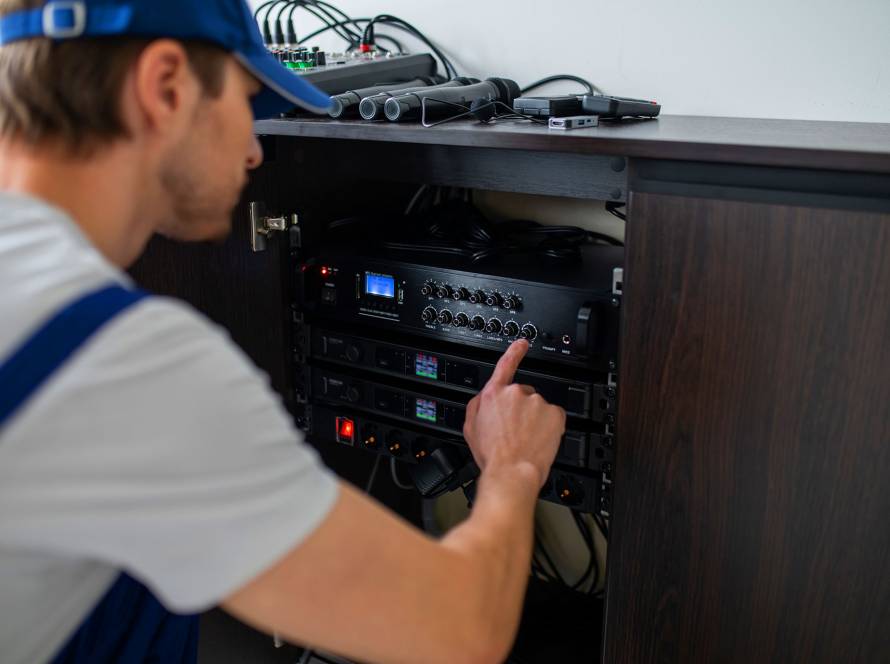
Audio-visual systems are often treated as add-ons. Something to install at the end of a project, after everything else is in place. This approach leads to problems. Poor performance, inconsistent results, and systems that do not meet expectations. The issue is not the technology. It is how it is planned and implemented.
AV Is Not Just Equipment
Many businesses focus on the hardware. Speakers, screens, and control systems. But AV is not just about the components. It is about how those components work together within a specific space. Without proper design, even high-quality equipment can perform poorly. Sound may not reach all areas. Displays may be placed incorrectly.
A system needs to be designed as a whole, not assembled piece by piece.
Planning Is Often Overlooked
AV is sometimes considered late in the process. By then, space limitations and design constraints are already in place. This restricts what can be achieved. Equipment placement becomes a compromise rather than a strategic decision. Early planning allows for better integration. It ensures that the system fits the space and meets the intended use.
One-Size Solutions Rarely Work
Every environment has different needs. A conference room, a retail space, and a hospitality setting all require different approaches. Using the same setup across different spaces leads to inconsistent performance.
Common mistakes in this area include:
- Using identical speaker layouts in different room sizes
- Ignoring how lighting affects display visibility
- Overlooking how people move through the space
Tailoring the system to the environment improves results.
Ease of Use Is Often an Afterthought
Complex systems can become a barrier instead of a benefit. If users struggle to operate the system, it will not be used effectively. Features may go unused. Frustration increases.
Simple, intuitive control makes a significant difference. It allows users to interact with the system confidently and efficiently.
Maintenance Is Part of Performance
AV systems require ongoing attention. Without maintenance, performance declines. Connections weaken. Components wear. Small issues develop into larger problems. Regular checks and updates help maintain consistency.
Systems Should Support, Not Interrupt
The purpose of AV is to enhance communication, presentation, or experience. When systems are poorly planned or difficult to use, they do the opposite. They create interruptions and reduce effectiveness. A well-designed system supports the business quietly. It works when needed and stays out of the way when it is not.
That is what most businesses overlook.